Featured articles
Read the highlights
Walking near livestock: a guide to staying safe in the countryside
Walking in the British countryside can be one of life’s great pleasures. But if your route crosses farmland, you may find yourself sharing the space with livestock such as cows, sheep or bulls.
Through my work advising on the welfare of sheep, cows and other farmed animals, I spend a lot of time in the countryside where these animals live.
That experience has shown me how important it is that people can enjoy these landscapes safely while respecting the animals that live there.
The countryside is shared by walkers, farmers and animals – and a little understanding goes a long way.
I’m often asked how to stay safe while walking in the countryside when farmed animals are nearby, as coming across a herd of farm animals can feel a little intimidating if you’re not used to it.
So here’s my guide for enjoying the countryside safely.
Quick tips for walking near livestock
Stay calm and move slowly
Give animals plenty of space
Keep dogs on a lead around livestock
Avoid getting between mothers and their young
Leave gates as you find them.
Are you allowed to walk through farmers’ fields?
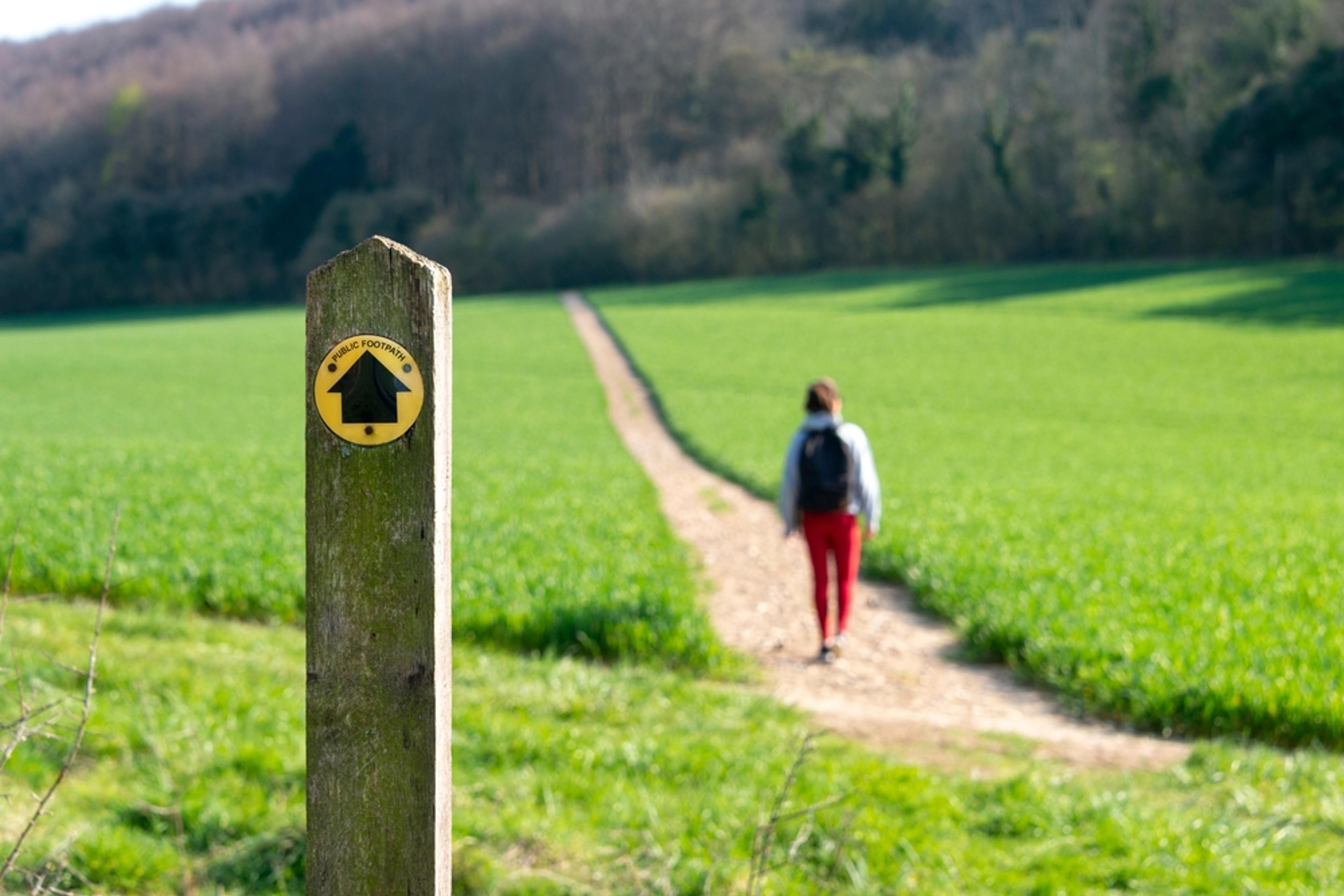
Yes, as long as there is a public right of way, such as a footpath or bridleway marked on an ordnance survey map.
Public rights of way allow people to cross farmland, but you must stick to the marked path.
When I’m out walking, I always try to:
Stay on the designated path
Leave gates as I find them
Respect the animals’ space.
Following these simple rules helps ensure walking through farmers’ fields remains safe and enjoyable for everyone.
How to stay safe around livestock
From my experience working with farmed animals, understanding their behaviour is the key to staying safe.
Farm animals are generally calm and peaceful, but they can become protective, especially if mothers have young nearby.
Many encounters that feel intimidating are simply animals being curious rather than aggressive.
If I come across livestock when walking on a public footpath, I try to:
Move slowly and calmly
Avoid sudden movements
Give animals plenty of space.
Staying calm helps animals feel calm too, and shows respect for the environment they live in.
What to do when walking through a field of cows
Cows are naturally curious creatures. If they walk towards you, they’re often simply investigating.
However, cows with calves can be more protective.
If I need to walk through a field of cows, I try to:
Walk around the herd rather than through the middle
Give cows plenty of space
Keep dogs on a short lead.
Being calm and predictable helps avoid startling the animals.
What to do if cows run towards you when walking
It can feel alarming if cows start moving towards you, but often, they’re just curious or expecting food.
If this happens, I recommend:
Staying calm
Walking steadily towards the nearest gate or exit
Avoiding running or sudden movements.
What to do if a bull is nearby
Bulls can look intimidating, but it’s rare to find a dangerous bull in a field with a public right of way.
This is because dairy breed bulls over 10 months old are generally not allowed in fields crossed by public footpaths.
Beef breed bulls may only be kept in fields with public paths if they’re accompanied by female cows.
If you do encounter a bull:
Stay calm and walk steadily towards the nearest gate or stile
Avoid shouting or waving your arms
Move calmly away if the bull approaches.
In most cases, bulls will ignore walkers passing through calmly.
Can you touch farmed animals?
It can be tempting to stroke a friendly-looking sheep or cow, but I always advise against approaching farmed animals.
It can cause them unnecessary stress, and there’s also a risk of spreading disease between people and animals.
The best way to show care for farmed animals is to simply observe them from a distance.
Walking near sheep and lambs
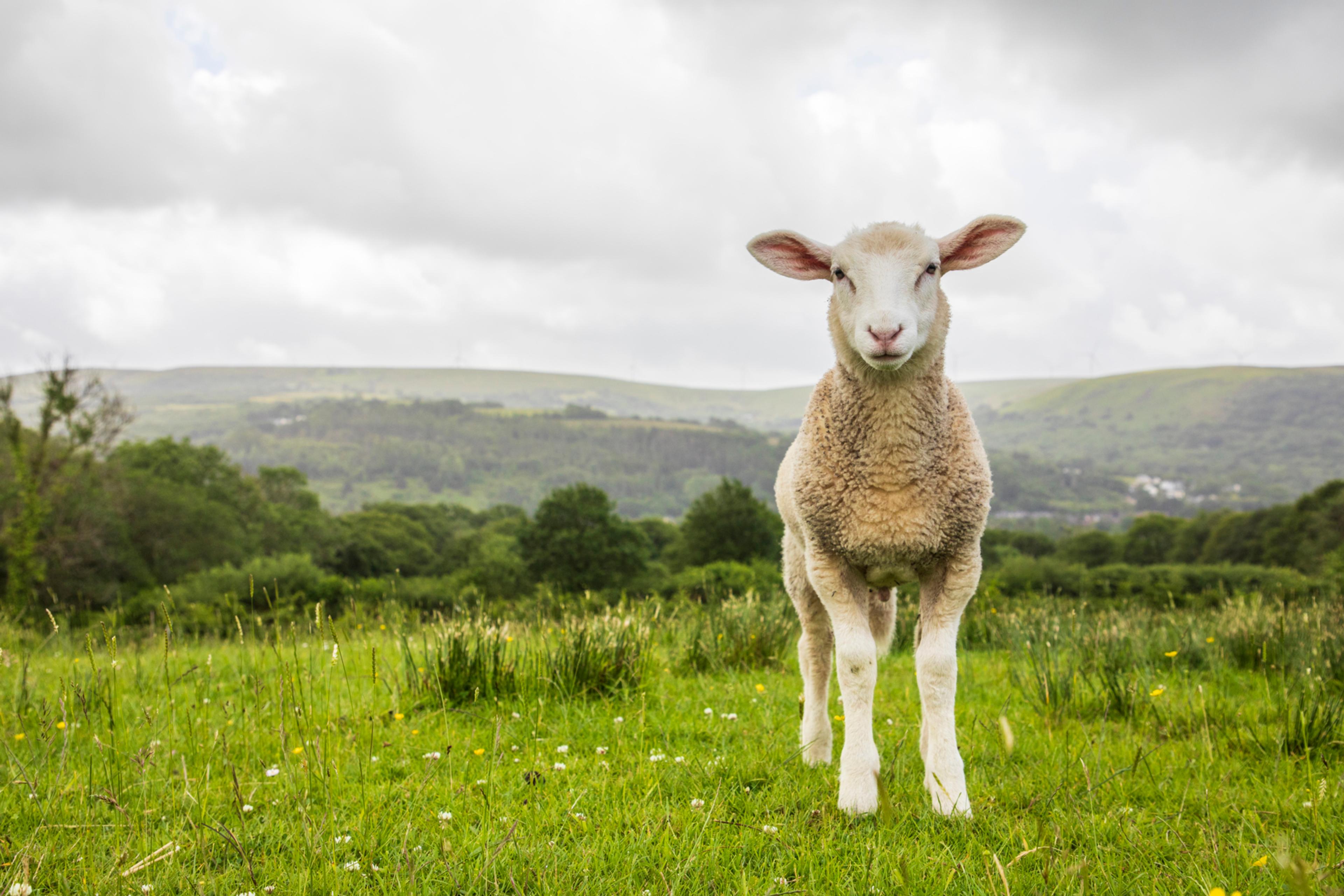
Sheep are usually gentle, but ewes are very protective of their lambs.
If I’m walking through a field with sheep, I make sure to:
Keep to the footpath
Avoid getting between a ewe and her lambs
Move calmly through the field.
If you spot a sheep stuck on her back (often called being ‘cast’), check the gate or look for signs showing the farmer’s contact details and let them know.
A sheep in this situation may struggle to get up again, which can quickly become life-threatening, particularly if she’s heavily pregnant or has a full fleece.
If it’s safe to do so, you can gently help a sheep back onto her feet by carefully rolling her onto her side and allowing her to regain her balance before standing.
However, only attempt this if the sheep is calm and there are no aggressive animals nearby.
If you’re unsure, you can call the RSPCA for advice on 0300 1234 999.
Livestock worrying law: what dog walkers need to know
Walking with your dog is a wonderful way to spend time outdoors. But farmland is also a workplace and home for farmed animals.
Even well-trained dogs can instinctively chase livestock.
This can cause injury or severe stress for animals and may also put farmers, walkers and dogs themselves at risk.
When walking your dog near livestock, I recommend:
Keeping your dog on a lead around livestock
Choosing routes that maximise distance from animals
Ensuring your dog is secure at home, particularly if you live near farmland.
If your dog does chase or attack livestock, call the police immediately if the incident is happening and contact the farmer as soon as possible.
It’s been an offence to allow a dog to worry livestock under the Dogs (Protection of Livestock) Act since 1953 in the UK.
From 18 March 2026, updated livestock worrying laws come into force, strengthening the powers available to police and the courts.
The updated legislation:
Makes a clearer distinction between livestock worrying and livestock attacks
Extends protections to incidents that happen on roads and public paths near livestock
Includes camelids such as llamas and alpacas
Introduces a defence where a dog was under someone else’s control without the owner’s consent, for example, if it had been stolen
Allows courts to order offenders to pay the costs of seizing and detaining a dog
Increases the maximum penalty from £1,000 to an unlimited fine.
Why responsible walking matters
Livestock worrying can have serious consequences for farmed animals.
Dogs chasing sheep or other farmed animals can cause injuries, severe stress, miscarriage in pregnant animals and even death.
Through my work with farmers and farmed animals, I see how important it is that these animals feel safe in the fields where they live.
By walking responsibly, keeping dogs under control and respecting farmed animals’ space, we can all help keep the countryside safe for the animals that live there and the farmers who care for them.
Author biography
Holly Gower is a senior scientific and policy officer at the RSPCA, specialising in animal behaviour and welfare.
She holds a PhD from the University of Essex, researching the social behaviour of dairy cows, alongside an MSc in animal welfare.
Holly has spent her career working to improve the lives of animals, including more than six years as a dog health and wellbeing specialist at Guide Dogs.
Her work combines scientific expertise with practical experience of animal behaviour, giving her valuable insight into how farmed animals behave and how people can safely share countryside spaces with them.