What are farrowing crates – and why do they matter for pig welfare?
By Phoebe Hartnett, RSPCA senior scientific and policy officer
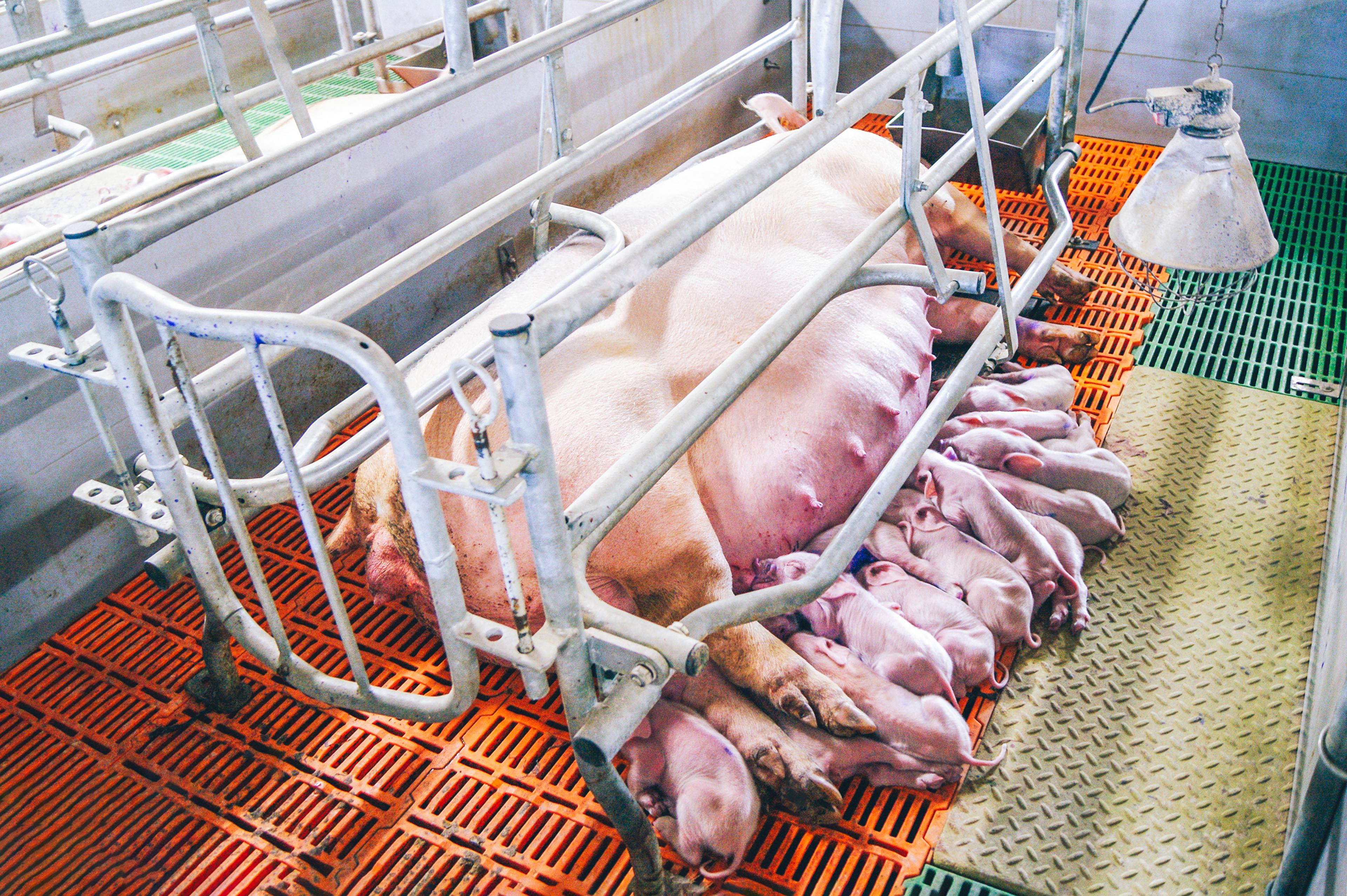
Farrowing crates are still used on many pig farms in the UK and around the world.
These metal-barred cages are designed to confine mother pigs (called sows) before and after they give birth.
While they were introduced to protect piglets, I’ve seen first-hand how much these crates negatively affect sows’ welfare.
In this blog, I’ll explain what farrowing crates are, why they’re used, the problems they cause and how, if you eat meat, choosing higher welfare pork can make a difference.
Why farrowing crates are used
Sows are large animals, often weighing around 200kg, while newborn piglets weigh less than 2kg.
Because of this big size difference, there’s a risk of piglets being accidentally crushed when a sow lies down or changes position.
Farrowing crates are designed to reduce this risk by restricting the sow’s movement.
Some farms also use them because they
- take up less space than larger pens
- make it easier to manage sows and piglets
- are believed to lower piglet deaths (although research shows this isn’t always the case)
But while crates may offer some convenience, they come at a serious cost to animal welfare.
The problem with farrowing crates
Pigs are highly intelligent, social animals. In the wild, a sow’s natural instinct is to build a nest before giving birth. Inside a farrowing crate, she has no space to do this.
In fact, she can’t even turn around. She can only take a few steps forward and back.
This lack of freedom leaves sows:
- Stressed and frustrated
- Unable to explore or interact naturally with their piglets
- Prevented from expressing natural behaviour like rooting or nesting.
Each time she gives birth, a sow will probably spend five weeks confined in a crate.
With two litters a year, that’s nearly a quarter of her adult life spent in a cage where she can’t even turn around.
Farrowing crates are legal in the UK
Around 60% of UK sows are confined in farrowing crates when giving birth and nursing their piglets.
But not on RSPCA Assured-certified farms. The RSPCA’s welfare standards don’t allow farrowing crates.
The standards also ensure that sows always
- have enough space to turn around
- be provided with straw or other bedding for comfort
- be able to nest, rest and care for their piglets freely.
This approach protects piglets while also ensuring the sow’s welfare.
Better alternatives to farrowing crates
There are kinder ways to protect both sows and piglets.
That’s why sows are never confined in farrowing crates on RSPCA Assured-certified farms.
Instead, they live in:
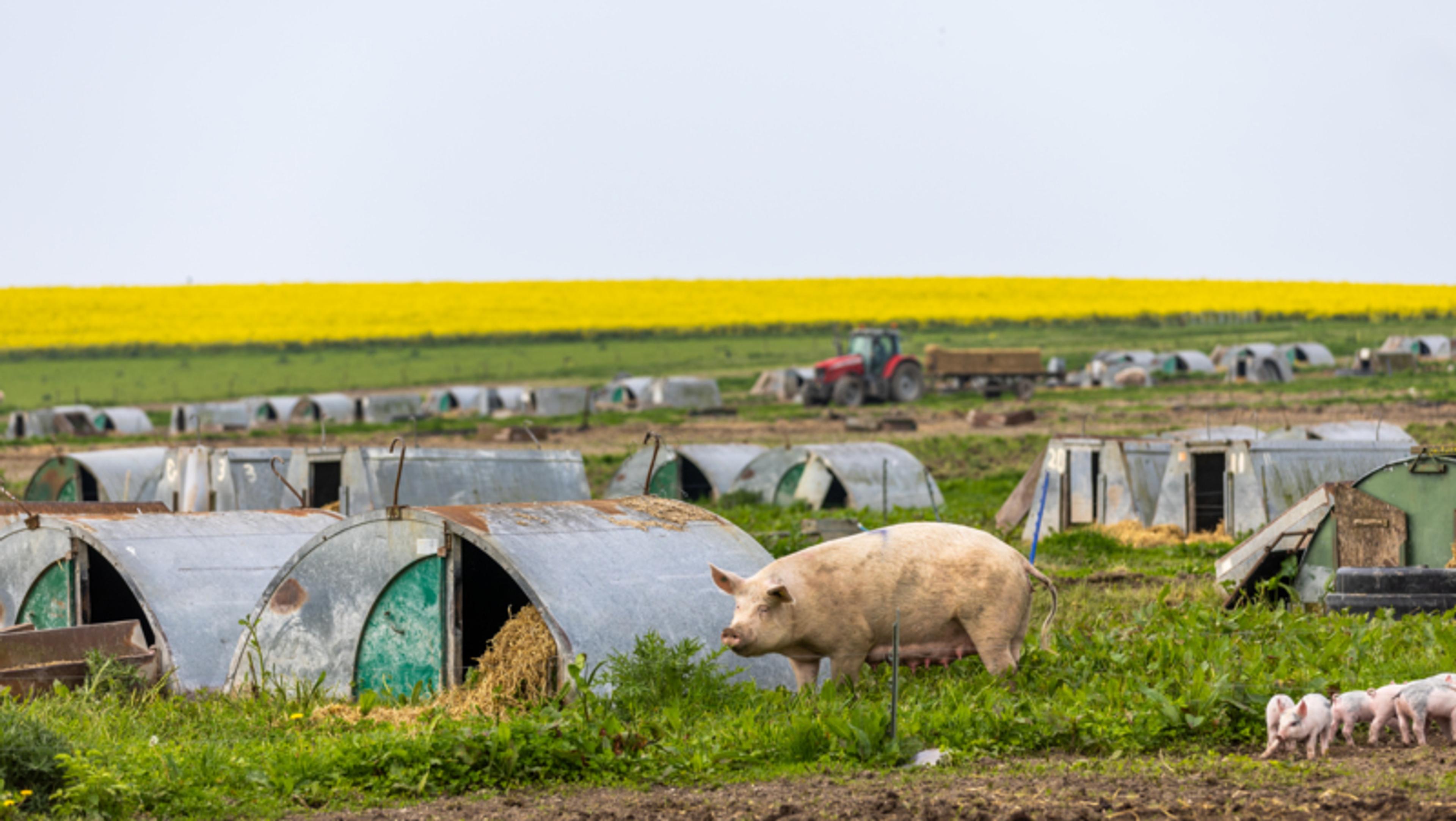
- Spacious indoor pens with straw or other nesting materials
- Outdoor paddocks with access to dry, bedded shelters.
This means sows have the freedom to move around, care for their piglets and build nests.
Sow stalls vs farrowing crates
Farrowing crates are sometimes confused with sow stalls (also called gestation crates), but they’re not the same thing. Both restrict a sow’s movement, but they’re used at different stages of her reproductive cycle and for different reasons.
What is a farrowing crate?
A farrowing crate is a metal-barred structure used around the time a sow gives birth and while she’s nursing her piglets.
- The crate restricts the sow’s movement so she can stand up and lie down, but can’t turn around
- It usually has a separate area where piglets can move away from their mother
- Sows can be confined in farrowing crates for up to five weeks – from a few days before giving birth until the piglets are weaned. The main reason given for using farrowing crates is to reduce the risk of a sow accidentally crushing her piglets when she lies down or changes position.
While farrowing crates are intended to protect piglets, they severely restrict the sow’s ability to move and prevent her from carrying out important natural behaviours, such as walking, exploring and nest building.
What is a sow stall?
A sow stall is an individual pen designed to confine a sow during pregnancy. It’s usually only slightly larger than the sow herself, allowing her to stand up and lie down but not turn around.
- Sow stalls were traditionally used throughout pregnancy, which lasts almost four months. After pregnancy, the sow would then be moved into a farrowing crate to give birth and nurse her piglets.
There were several reasons why farmers used sow stalls. Keeping sows individually made it easier to control how much each pig was fed and to monitor her health and body condition.
It also reduced fighting between sows, particularly around feeding, and made it easier for farmers to carry out routine management.
However, these management benefits came at a cost to the sow. Being kept in such a restricted space meant she had very little opportunity to walk, turn around, explore her surroundings or interact with other pigs.
This restriction of movement and natural behaviour was a major welfare concern and is why sow stalls were banned in the UK in 1999.
Are sow stalls and farrowing crates still legal?
Sow stalls were banned in the UK in 1999 because of concerns about their impact on sow welfare. They’re still used in some countries around the world.
In the EU, sow stalls were partially banned in 2013, but sows can still be kept in stalls for the first four weeks of pregnancy.
Farrowing crates, however, remain legal in the UK. A sow can currently be confined in a farrowing crate for up to five weeks around the time she gives birth.
But farrowing crates are not permitted on RSPCA Assured-certified farms. The RSPCA’s welfare standards require sows to have enough space to turn around and move freely, with suitable bedding and materials that allow them to express natural behaviours such as nest building.
So, while sow stalls and farrowing crates are different systems, they have one important thing in common: both restrict a sow’s freedom of movement. On RSPCA Assured members’ farms, sows are never confined in either.
Choosing higher welfare pork
Farrowing crates highlight the gap between standard and higher welfare farming.
If you eat pork, bacon, ham or sausages, look for the RSPCA Assured label when you’re shopping.
Then you know the pigs were never kept in farrowing crates and were raised to higher welfare standards.
Every purchase supports farmers who put animal welfare first.
And together, our choices matter. We can push the food industry – and policymakers – towards ending farrowing crates for good.
Monday 22 September 2025