
Natural daylight standard E6.4: what free-range egg producers need to know
By Julie Taylor, RSPCA Assured new standards engagement advisor
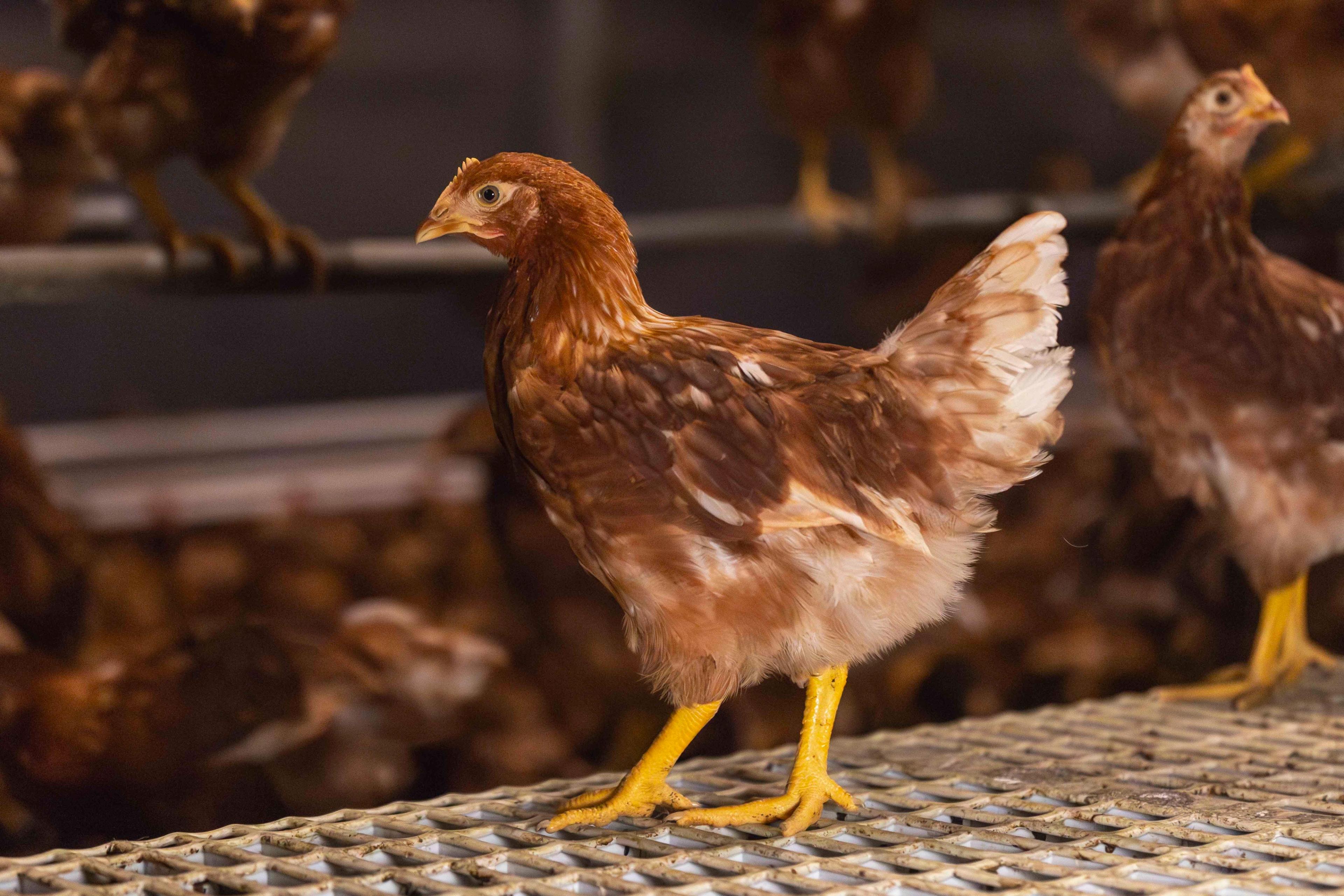
We know there’s been a lot of discussion about the RSPCA’s natural daylight requirements for laying hens, particularly standard E6.4 and what it means for free-range egg producers.
We understand that making changes to existing sheds can present practical challenges, and that every farm is different.
That’s why we paused E6.4 in July 2025: to give us time to listen to feedback from members and the wider industry and better understand the challenges involved in putting the requirement into practice.
Following this work, standard E6.4 will resume for all free-range flocks placed from 1 December 2026.
We want to help members understand what this means for their farms, why natural daylight is important for hens and, importantly, what support is available if you need to make changes.
What’s standard E6.4?
E6.4 requires natural daylight to be provided through all popholes in free-range sheds when birds need to be housed during the natural daylight period and can’t access the range.
This might be necessary due to:
- a compulsory housing order
- bad weather, where relevant and permitted by national legislation
- veterinary advice
- maintenance or other situations where birds need to remain indoors.
The requirement applies to all free-range flocks placed from 1 December 2026, so if you place a flock before 1 December 2026, E6.4 won’t apply to that flock.
The implementation dates for the other natural daylight standards haven’t changed. The existing deadlines for standards E6.2 and E6.3 remain in place, so the resumption of E6.4 doesn’t bring forward (or delay) any of the other natural daylight requirements.
It’s important to note that E6.4 isn’t a new standard. It was included in the updated laying hen standards, but its implementation was paused in July 2025 following feedback from members about how it could be achieved in practice.
Why’s natural daylight so important?
Hens have highly developed vision and can see a wider spectrum of light than humans. Natural daylight provides the full visual spectrum they’ve evolved to experience and use.
Research shows that hens have a preference for natural daylight and it can encourage positive behaviours such as foraging, preening and dustbathing.
For free-range hens, natural daylight can also help encourage ranging by reducing the difference between the indoor and outdoor environments.
There’s also evidence linking natural daylight with better feather condition and reduced risks of some welfare problems, including feather pecking and keel bone damage.
Natural daylight is already part of higher-welfare poultry production
All RSPCA Assured meat chickens and turkeys are required to have natural light inside the house, and there’s been positive feedback from the meat chicken industry about the effects on bird activity.
Natural daylight is also required in a number of higher-welfare production systems across Europe.
Our approach is evidence-led, and the RSPCA's standards are informed by the latest available scientific research and practical experience. The evidence we’ve reviewed supports the welfare benefits of providing natural daylight to laying hens.
Why does E6.4 matter if my hens are free-range?
Free-range hens have the opportunity to experience natural daylight when they’re outside. But there may be times when they need to remain indoors during daylight hours.
When this happens, they lose access to the natural daylight they’d normally experience through the popholes.
E6.4 is designed to maintain that natural daylight when birds need to be housed, rather than creating a completely new lighting environment for them.
It’s particularly relevant during compulsory housing orders, when hens may have to remain indoors for extended periods because of the risk of bird flu.
Not every hen will choose to range all the time, either. So providing natural daylight inside the house gives hens the chance to experience it – and supports them to engage in natural behaviours even when they’re indoors.
What do I need to do?
If you have a free-range shed and will be placing a flock from 1 December 2026 onwards, you’ll need to have a solution in place that allows natural daylight to continue to enter through all popholes when the birds need to be housed during daylight hours.
The solution needs to be permanent because the need to house birds can arise unexpectedly. For example, you may need to bring birds indoors because of bad weather, maintenance work or veterinary advice.
One possible solution is to fit a transparent or translucent material, such as toughened glass or acrylic, into the pophole doors to create a window.
The right solution will depend on your individual circumstances, so please contact a member of the RSPCA Assured farming and technical engagement team if you're unsure what will work for your farm.
What if I can't make the changes in time?
If you're concerned you may not be able to meet E6.4, please don’t wait until your assessment to let us know – it’s far better to contact the RSPCA Assured farming and technical engagement team as soon as possible and before placing your flock.
The team can talk through your situation, help you identify an appropriate solution and discuss what steps you need to take. The earlier you contact us, the more we can do to help.
If you're planning to place a flock in December 2026 or January 2027, we particularly encourage you to get in touch as soon as possible.
We're here to support you
We know no two farms are the same. Shed designs, pophole arrangements and individual circumstances vary considerably, so there isn't necessarily one solution that will work for everyone.
As well as providing individual support via the farming and technical engagement team, we've put together a detailed Q&A on natural daylight and standard E6.4, covering implementation, pophole modifications, verandas, existing windows, flock placement dates and managing potential welfare concerns.
There’s also more general advice about meeting the RSPCA’s standards in the info for members area of our website.
Natural daylight is an important part of good hen welfare, and our aim is to help every member understand what’s required and find a practical way to meet the standard.
Thank you for your continued commitment to higher welfare for your flocks and for caring for them to the RSPCA welfare standards – we appreciate your support.
Friday 28 August 2026