
E 6.4 in practice
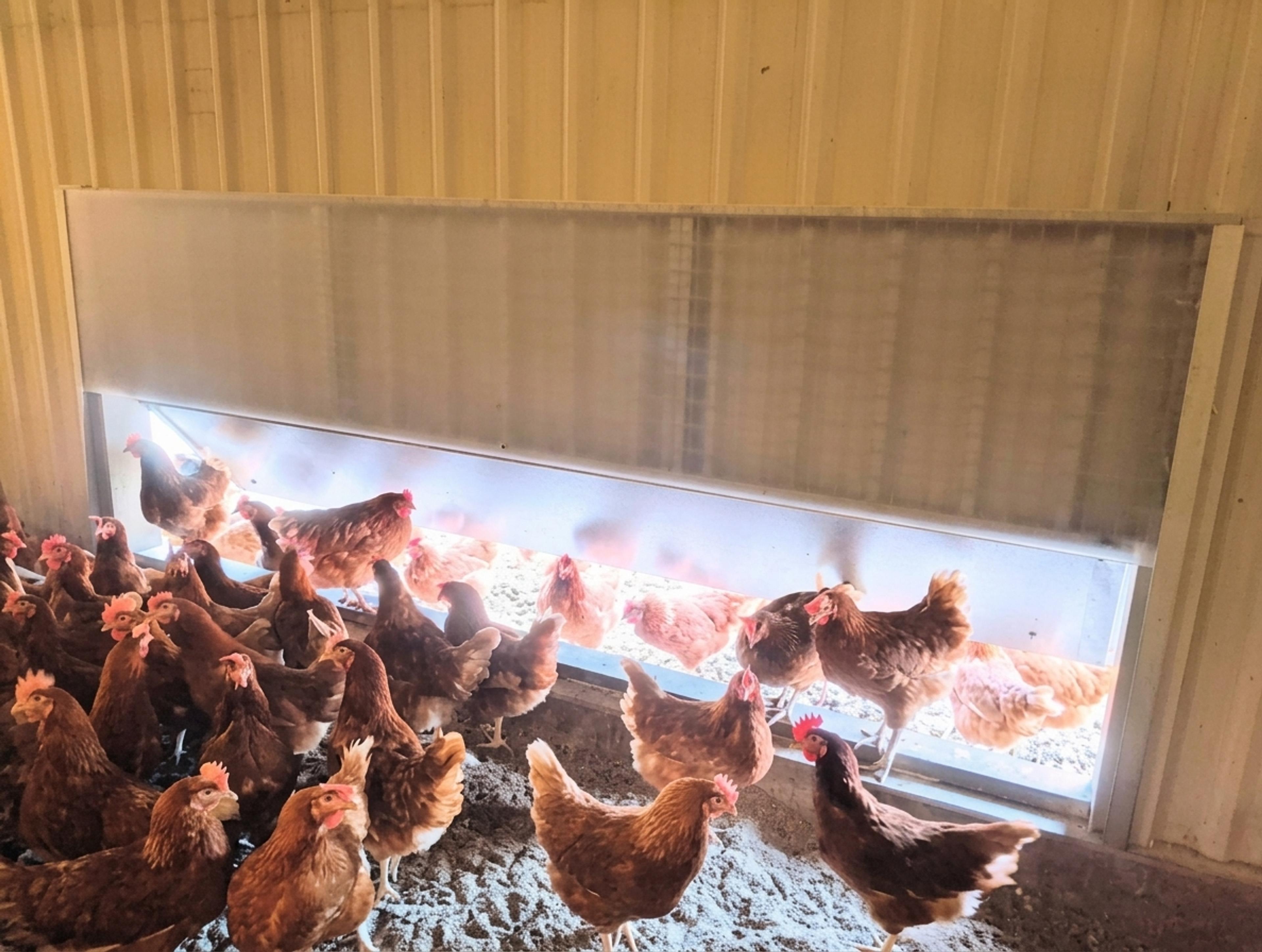
This guidance explains how to fit and use translucent pophole covers, familiarise birds with them – and manage flocks if they need to be confined indoors.
Plan ahead
Modifications to the popholes should be made at turnaround when the house is empty of birds.
However, it’s important to plan and design your solution well in advance.
Designing and fitting pophole covers
Pophole covers should:
- Be easy and safe to operate
- Be robust enough to withstand regular use and cleaning
- Be securely fitted so they can be lowered over the popholes when needed and latched into place
- Not every pophole design will lend itself to this solution. For example, there may be vents, lights or other obstructions on the wall above the pophole. If this is your situation, we encourage you to contact the RSPCA Assured farming and technical engagement team (FaTE) for advice.
Examples of fixing methods
Side runners
Butt hinges
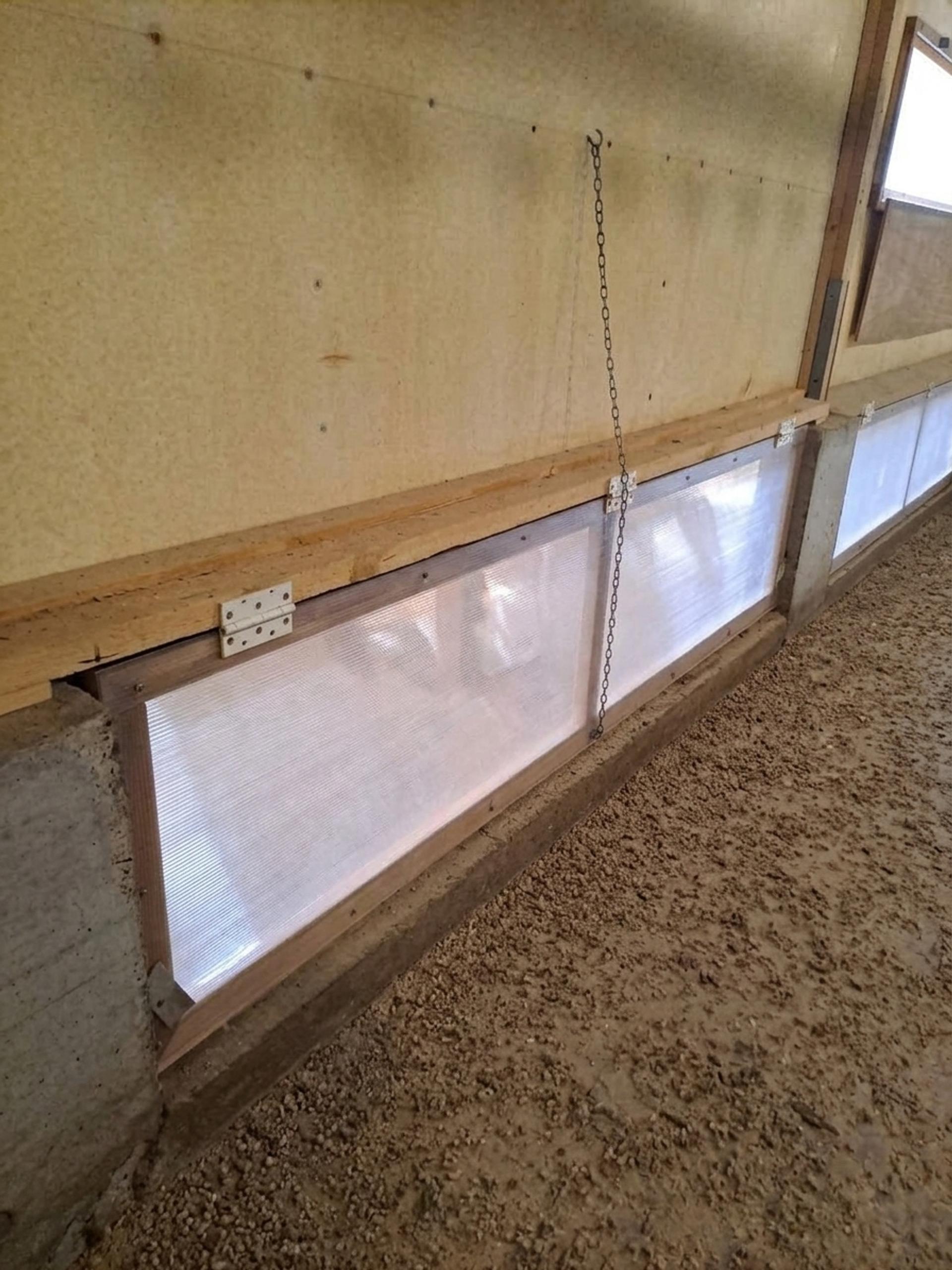
Choosing a suitable material
Pophole cover materials don’t need to be completely clear. Misted or frosted materials can work well because they diffuse the incoming daylight, while preventing birds from having a clear view of the range outside.
Example materials:
- Acrylic sheets
- Polycarbonate sheets
- Horticultural polythene film (as used on polytunnels)
- Mesh (not recommended for use during mandatory poultry housing orders when disease risk from the range is high).
This is not a prescriptive list - if you’d like to check whether a material would be appropriate, please contact the RSPCA Assured farming and technical engagement team (FaTE) for advice.
Familiarising birds with translucent popholes
Birds should be familiar with translucent pophole covers before the need for birds to be kept indoors arises. In practice, this means introducing them before birds access the range, for example:
- 16 weeks old - pullets placed, artificial light only, translucent covers in place over closed popholes
- 18 weeks old - translucent popholes covers are used 9am until dusk or lights off
- 19 weeks old - translucent popholes covers are used 9am to noon, open popholes from noon until dusk or lights off
- 21 weeks old - open popholes from 9am until dusk or lights off.
This allows the birds to become accustomed to translucent popholes – and to the sound of the pophole opening mechanism – before they have full access to the range.
Using translucent popholes with a ranging flock
If a ranging flock needs to be confined to the house, be prepared to manage the birds’ behaviour in response to the confinement.
Natural daylight should be provided through the translucent popholes from 9am, and the flock monitored carefully and frequently, especially if it's the first time birds have been confined after having access to the range.
As you’ll be aware, birds become used to their daily routine and may initially gather or crowd at the popholes at 9am, expecting to be allowed out onto the range.
This behaviour should reduce as birds become accustomed to their new routine. This is particularly relevant during longer periods of confinement, such as a mandatory poultry housing order.
Managing bird behaviour during confinement
Your housing confinement contingency plan, developed with your vet (please see standards R 6.1 to R 6.3), sets out how you’ll manage free-range birds if they need to be housed during the day.
We recommend you continue to monitor the flock closely and respond promptly to any changes in behaviour or welfare.
If necessary, light levels can be reduced to help manage negative behaviours such as feather pecking or aggression. However, reducing light should be a temporary measure and a last resort.
We recommend referring to the hen behaviour and natural daylight page on our website for additional practical advice.
Monday 12 October 2026