
Avian influenza: advice and support for RSPCA Assured members
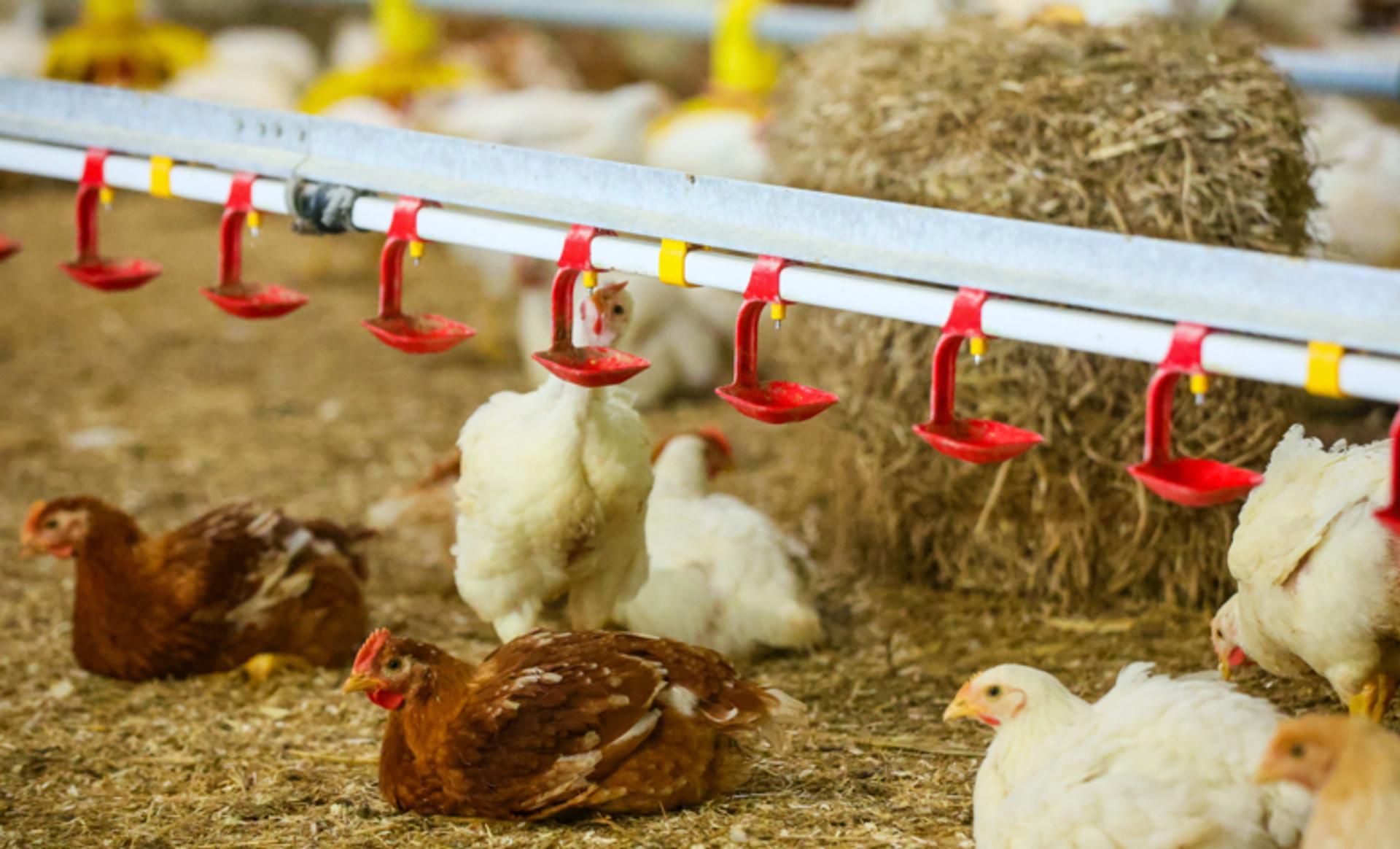
Unfortunately, it’s avian influenza (AI) season, and with recent increases in outbreaks and housing orders announced in some areas, we know this is a challenging time for our poultry members – and the wider industry.
At RSPCA Assured, we’re here to support you. Our farming and technical engagement team is here to offer advice and practical guidance to help you continue meeting the RSPCA welfare standards throughout this winter.
You’ll find information about the assessment options available to you below.
There’s also:
- Information about the extra biosecurity precautions we’re taking
- Poultry welfare tips for the AI season
- Advice on making housing confinement contingency plans
- Where to find further information and support.
We also recognise that the pressures of AI can affect your mental health and wellbeing. If you’re finding things difficult, you don’t have to face them alone. The organisations below offer confidential wellbeing support from people who understand the challenges of farming:
What is bird flu / ‘AI’?
- Just like humans, animals can catch viruses and become unwell. Avian influenza, also known as bird flu or AI, is a highly contagious viral disease that affects birds.
- It occurs naturally in wild aquatic birds such as ducks, geese, swans and gulls. These species can carry the virus without always showing signs of illness. Unfortunately, they can spread it to domestic poultry and other birds when they come into contact with them or contaminate shared environments.
- Once bird flu reaches farmed birds, especially chickens and turkeys, it can spread rapidly. In many cases, the virus causes severe illness in birds and can be fatal.
- Bird flu is mainly transmitted through direct contact with infected birds or their droppings, or by touching surfaces and equipment contaminated with the virus.
Can AI be transmitted to humans?
- Whilst bird flu is considered a ‘zoonotic’, meaning it can infect people, the advice from the UK Health Security Agency (UKHSA) is that it doesn’t pose a significant risk to human health, and the risk to the general public’s health is very low. It’s extremely rare for humans to catch bird flu, especially when proper hygiene and biosecurity measures are followed.
- It’s important to note that avian influenza does not spread easily between humans. And, in the UK, strict government controls are in place to limit the spread of bird flu and protect public health, farmed animals and wildlife.
- If transmission occurs, it usually happens through very close and prolonged contact with infected birds or heavily contaminated environments. Cases of the virus spreading from person to person are also very rare
Can AI be transmitted to other animals or my pets?
- Other mammals like foxes and otters can occasionally catch the virus from eating infected birds, though the risk is low
- There have been no known cases of dogs and cats becoming infected by avian influenza in the UK, but if your pet is a keen hunter, try to take steps to minimise this behaviour. If you’re worried about a pet, please call your vet immediately.
Can AI be transmitted to other livestock?
- Yes, other farm animals can catch AI, but the risks are very low. Government organisations continually monitor livestock to ensure that AI is not spreading to farmed species.
- If you have any concerns, please speak to your vet.
How do domestic birds catch AI/bird flu?
- Bird flu occurs naturally in wild aquatic birds such as ducks, geese, swans and gulls. These species can carry the virus without always showing signs of illness. Unfortunately, they can spread it to domestic poultry and other birds when they come into contact with them or contaminate shared environments.
- Once bird flu reaches farmed birds, especially chickens and turkeys, it can spread rapidly. In many cases, the virus causes severe illness in birds and can be fatal.
- Bird flu is mainly transmitted through direct contact with infected birds or their droppings, or by touching surfaces and equipment contaminated with the virus.
Is there bird flu/ AI in the UK?
- Yes, bird flu is found worldwide with variations in strains.
What should I do if I think a bird is infected with bird flu /AI?
- Bird flu is a notifiable disease in animals, so you should report any suspected case to the Animal and Plant Health Agency (APHA), even if you're not sure. Never touch or pick up any dead or visibly sick birds that you find.
- Typical symptoms in birds include sneezing, swollen heads, watery eyes, lethargy and loss of balance.
- You can also call:
- For England: the Department for Environment, Food and Rural Affairs (DEFRA) helpline on 03459 33 55 77 if you find dead wild birds.
- For Scotland: Avian influenza (bird flu): how to spot and report the disease - gov.scot. Report any dead wild bird findings via 03459 33 55 77
- For Wales: https://www.gov.wales/avian-influenza-bird-flu - call the Defra helpline (03459 33 55 77) if you find any dead wild birds.
- For Northern Ireland: Latest Situation | Department of Agriculture, Environment and Rural Affairs - use the dead wild bird online reporting tool if you find any dead wild birds
- DAERA Dead Wild Bird Online Reporting Tool | Department of Agriculture, Environment and Rural Affairs
- You can find out more about the symptoms of bird flu on the Government website here.
What happens if there is an AI/ bird flu outbreak?
- When an outbreak of avian influenza (AI), or bird flu, is confirmed, strict government controls come into force to help contain the virus and protect both animal and human health.
- The main priority is stopping the spread. This often means setting up control zones around the affected site, where movement of birds and bird-related products is restricted. In some cases, sadly, infected or at-risk flocks will need to be humanely culled to prevent further transmission.
- All poultry farmers must follow enhanced biosecurity measures when a housing order is in place. These include keeping birds indoors or under cover, limiting access to farms, and thoroughly cleaning and disinfecting clothing, equipment and vehicles.
Can birds recover from avian influenza or do they have to be culled?
- Avian influenza (type HPAI) is fatal for poultry. The LPAI strain is less serious but can cause problems and prompt culling of infected poultry is usually necessary.
Does the RSPCA support the culling of infected birds in the event of an outbreak?
- The prompt culling of infected poultry is usually necessary (depending on the exact strain of the disease) in order to prevent further suffering and the spread of disease.
- Procedures for culling must be as humane as possible, proper and sufficient equipment must be used, and facilities and competent personnel must be available to ensure that this can be achieved.
- Prompt culling following confirmation of the presence of disease will also help to prevent further unnecessary suffering.
Advice for members
What precautions is RSPCA Assured taking to limit the spread of avian influenza on its member farms?
- Sadly, increased avian influenza outbreaks have become a new reality, and we understand how stressful and worrying this is for our members. We’re committed to supporting farmers through these tough times.
- Our farming and technical engagement team is always on hand to offer advice, support and practical guidance to ensure members meet the RSPCA welfare standards throughout an outbreak.
- We take biosecurity extremely seriously and have introduced enhanced measures to help protect your birds and prevent the spread of avian influenza. These include:
- Training our assessors on the latest biosecurity practices ahead of the AI high-risk period.
- Regular washing of assessors’ vehicles to ensure all mud and debris are removed (in areas where there are high numbers of AI cases).
- Enhanced disinfectant procedures when there’s a high risk of AI, including spraying of vehicle wheels with DEFRA-approved disinfectant on arrival and departure from your farm (in addition to your own wheel washes).
- Using foot dips, sanitising facilities and wearing foot coverings
- Carrying FFP3 face masks and disposable gloves.
- If moving between sheds, we’ll follow the member's lead on where to take off and put on additional PPE.
- At the end of the visit, all PPE will be removed in the outer biosecure area and returned to the member for disposal.
- We also take a flexible approach to farm assessments in areas affected by control zones, housing orders and avian influenza protection zones (AIPZ).
- If a site is in a control zone, housing order area or AIPZ, the farmer may be able to choose a desktop assessment instead of an in-person assessment. However, there are some members who will still need to receive an in-person assessment, including:
- New member applications
- Seasonal turkey production
- Members involved in active complaints or incidents
- Members with current sanctions in place or who have received sanctions within the previous two years.
Are you taking a flexible approach to assessments?
- We take a flexible approach to farm assessments in areas affected by control zones, housing orders and avian influenza protection zones (AIPZ).
- If a site is in a control zone, housing order area or AIPZ, the farmer may be able to choose a desktop assessment instead of an in-person assessment. However, there are some members who will still need to receive an in-person assessment, including:
- New member applications
- Seasonal turkey production
- Members involved in active complaints or incidents
- Members with current sanctions in place or who have received sanctions within the previous two years.
- Desktop assessments count as a full assessment, but will be followed up with an in-person unannounced visit within six months to ensure the RSPCA welfare standards are being met.
What is a desktop assessment?
- Desktop assessments focus on bird health and welfare and usually take up to two hours, but members should allow extra time for any additional questions or discussion.
- Members will need to be able to take part in a video conference call using WhatsApp (or an alternative video call application such as Google Meet) and walk around to show the assessor different areas of their site.
- For members who don’t have a stable wifi or mobile network connection available, they can provide short pre-recorded video clips instead.
- We’ll call our members to arrange and discuss the desktop assessment beforehand, providing full details of what’s involved.
- Desktop assessments count as a full assessment, but will be followed up with an in-person unannounced visit within six months, but no later than 30 September 2027, to ensure the RSPCA welfare standards are being met.
Do I have to pay for a desktop assessment?
- If there is a mandatory housing order, the desktop assessment will be free of charge.
- If your site is outside a mandatory housing order and requests a desktop assessment, we will assess the fee on a case-by-case basis.
If I have a desktop assessment, do I have to pay for the follow-up in-person visit?
- In recognition of the challenges Avian Influenza season presents, there will be no additional charge this AI season for the follow-up in-person, unannounced visit within six months. Anyone who has paid will be given a refund.
- We hope this will provide members with additional support during this difficult and stressful time.
- However, as a not-for-profit organisation, free follow-up visits may be subject to reinstatement in following years, subject to a review of our resources and other associated costs of an audit.
- Members who apply for a desktop assessment will be informed by their assessor if they are eligible for this type of assessment.
If a desktop assessment counts as a full assessment, why are you charging me for a follow-up visit? Surely if I’ve done my assessment, it is down to you if you want to do an extra visit?
- We want to offer our members as much flexibility as possible, as we understand that AI is a very stressful time. This is why we are allowing eligible members the option of having a desktop assessment - this means they can delay us coming onto the site and avoid additional biosecurity worries.
- However, it is imperative for farmed animal welfare that we see each member site in person at some point within a six-month period - this is so we can be sure the RSPCA’s strict welfare standards are being upheld.
- In recognition of the challenges Avian Influenza season presents, there will be no additional charge this year for the follow-up in-person, unannounced visit within six months.
- However, as a not-for-profit organisation, chargeable follow-up visits may be subject to reinstatement in following years, subject to a review of our resources and other associated costs of an audit.
- Members who do not wish to delay their site visit can instead commence with their normal in-person assessment, during which our assessors will follow strict biosecurity procedures:
- All assessors have the necessary PPE and DEFRA-approved disinfectants
- Assessors follow all site-specific biosecurity requirements communicated when the assessment is booked
- Assessors have received training on the pathology and transmission of AI and improved biosecurity.
If a Desktop Assessment constitutes a full assessment, how can you really be sure the farm is meeting higher welfare standards? Isn’t this making a mockery of your higher welfare scheme?
- We completely understand why people are concerned. Wherever possible, we want to have boots on the ground and see farms in person. We are absolutely committed to visiting all of our members in person, as long as it is safe to do so for all involved.
- Occasionally, during certain periods, such as an AI outbreak, we have to adapt our assessment process to best safeguard the welfare of our members, their birds and our own staff.
- Whilst desktop assessments count as a full assessment, we offer our firm reassurance that every member will also be followed up with an in-person visit within six months to ensure the RSPCA welfare standards are being met.
What can farmers do to improve flock welfare during a housing order?
- There are several proactive measures producers can take to improve flock welfare during a housing order. These include:
- Observe their birds more frequently and, where appropriate, add extra provisions, such as additional environmental enrichment items to help better safeguard bird welfare (the RSPCA standards for indoor and free-range systems already require enrichment in the house, such as pecking objects and perches).
- Maintaining continuous access to destructible environmental enrichment items that the birds depend on, such as straw and lucerne, is also key.
- Replenish enrichments more frequently during the housing order and ensure that all enrichment is biosecure before it is introduced into the shed. This is because bringing items inside has been one of the main risks of transferring infection. We would advise members to check out DEFRA’s advice on this issue.
- Maintain and provide good quality litter for birds as it provides excellent enrichment by promoting foraging and dustbathing behaviour. Keeping up good litter management and topping up with fresh material or providing alternative substrates in designated areas, such as sand, will help maintain the birds’ interest.
- Examples of enrichment and litter management guides can be found here: FeatherWel, Resources – LHWF.
- Further, we would encourage producers to consider building verandas - for both indoor and free-range birds - as they can offer many welfare benefits such as more space, natural light and fresh air and provide free-range birds with an outdoor climate during periods of mandated confinement.
- The RSPCA welfare standards for laying hens, chickens and turkeys also include a requirement for all sites to have a housing confinement contingency plan. These plans will help members prepare and safeguard the welfare of free-range birds if they have to be kept indoors. Each plan should include:
- Additional biosecurity measures
- Details of extra enrichment items to encourage activity and provide interest for your flock.
- Litter management to prevent heavily worn or poached areas forming
- Dustbathing provisions and how these will be managed.
- Actions to take if birds show high levels of aggression and feather pecking. For example, adding novel enrichment items.
- Details of on-farm mass culling protocols or methods that can be used at your site, should the very worst happen.
- Members who would like further advice on how to ensure the welfare of their flock during the high-risk AI season should reach out to our farming and technical engagement team, who will be happy to help.
Is RSPCA Assured supportive of bringing birds under its scheme indoors?
- From a welfare perspective, keeping usually free-ranging birds indoors should be avoided and only done as a last resort and if absolutely necessary for their welfare.
- There is likely to be an increase in stress to birds kept indoors when they have been used to going outside for some time. This could result in higher levels of feather pecking and smothering (i.e. birds piling on top of each other and causing suffocation).
- That’s why we encourage our members to provide more enrichment, such as extra perches and straw bales inside the barn, to allow the birds to peck, forage, explore and express their natural behaviours.
Can eggs be labelled free-range if a housing order is in place and the birds are indoors?
- As of early 2025, eggs from hens kept indoors during a mandatory government housing order due to avian influenza (bird flu) can be labelled as free-range for the entire duration of the housing measures in the UK.
- Even when birds need to be kept indoors for their safety, the RSPCA Assured label ensures that the hens have always been cared for to higher welfare standards.
How are site visits to turkey members being managed?
- Because of seasonal demand, turkeys are generally only produced once a year. Therefore, there is less opportunity for site visits than with other poultry species that are produced year-round and can be assessed at any point during a 12-month period.
- In order to protect the integrity of the scheme and ensure that members are upholding the RSPCA’s strict welfare standards, all turkey members will be required to have an in-person visit. A desktop assessment is not an option for turkey members.
- Members who receive an in-person assessment can be assured that RSPCA Assured’s assessors will follow both their biosecurity procedures and our own enhanced biosecurity protocols.
- We take biosecurity extremely seriously and have introduced enhanced measures to help protect your birds and prevent the spread of avian influenza. These include:
- Training our assessors on the latest biosecurity practices ahead of the AI high-risk period.
- Regular washing of assessors’ vehicles to ensure all mud and debris are removed (in areas where there are high numbers of AI cases).
- Enhanced disinfectant procedures when there’s a high risk of AI, including spraying of vehicle wheels with DEFRA-approved disinfectant on arrival and departure from your farm (in addition to your own wheel washes).
- Using foot dips, sanitising facilities and wearing foot coverings
- Carrying FFP3 face masks and disposable gloves.
- If moving between sheds, we’ll follow the member's lead on where to take off and put on additional PPE.
- At the end of the visit, all PPE will be removed in the outer biosecure area and returned to the member for disposal.
- We encourage any RSPCA Assured member who has concerns about AI or has any questions to get in touch, and we’ll do everything we can to help.
Does the RSPCA specify how birds under RSPCA Assured should be culled?
- The emergency killing of animals with a notifiable disease is overseen by APHA. The RSPCA calls on DEFRA to ensure procedures for culling are as humane as possible, and that proper and sufficient equipment, facilities and competent personnel are available to ensure that this can be achieved.
- The RSPCA welfare standards for laying hens 2025 contain guidance for laying hen members about culling for disease control purposes and ensuring culling is as humane as possible.
What is RSPCA Assured’s position on vaccinating poultry for AI?
- We understand how difficult outbreaks of avian influenza can be and welcome any research into possible vaccinations which would help tackle this.
- Some countries in Africa, Asia and Europe (France) have already implemented vaccination programs against certain strains of HPAI. However, in the UK, it is felt that further evidence is needed on vaccine performance, economic viability, operational delivery and trade implications, and as such, poultry cannot presently be vaccinated against Highly Pathogenic Avian Influenza (HPAI), for either disease prevention or as a disease control response, in the UK.
- Vaccination of poultry against AI in the UK is controlled under the Avian Influenza (Vaccination) Regulations 2006, and currently the only permitted use of HPAI vaccines in the UK is for avian species kept in zoos in England & Northern Ireland.
- In 2023, an ‘Avian Influenza Vaccination Taskforce’ was established by the UK government to make recommendations on the use of vaccinations as a preventative measure against HPAI for poultry in the UK.
- To inform its recommendations, the Taskforce draws on evidence from vaccination trials which are ongoing in continental Europe, in flocks of ducks, geese, turkeys and laying hens, with further trials set to take place in UK turkey flocks in 2026. These studies aim to provide additional evidence that these vaccines are safe and effective at stopping the virus from spreading, and that differentiation between infected and vaccinated birds is possible, to safeguard public health, animal welfare and international trade.
- This ability to distinguish between infected and vaccinated birds is a critical hurdle for current HPAI vaccination strategies. Whilst mortality and clinical signs of infection may be reduced, vaccinated birds can still pose a risk for transmission as they are still able to become infected, shed the virus, and transmit it to other birds, mammals, and humans. If undetected, this presents challenges for surveillance.
- Other key concerns regarding vaccination strategies that need consideration include vaccine administration and whether vaccines will remain effective as the avian influenza virus evolves. Further, some available vaccines require multiple doses at different time intervals. This will require catching and handling of poultry, which may result in stress, injuries and mortality.
- The RSPCA supports the principles of vaccination to improve poultry welfare by reducing the number of birds suffering the clinical symptoms of avian influenza.
- However, research into the development of a vaccine programme must consider the welfare of all animals affected, including those used to develop and test the vaccine. Accordingly, vaccine programmes must adhere to the three Rs: replacing animals with non-animal alternatives whenever possible, reducing the number of animals used.
What is the difference between a 3km Prevention Zone and a 10km surveillance and a housing order?
- Avian Influenza Protection Zone: This zone covers a 3km radius from the centre of the avian influenza outbreak and is put in place when an outbreak of avian influenza occurs on a commercial farm in a specific location. The intention is to contain the spread of the disease.
- 10km Surveillance Zone: A surveillance zone covers the same area as a Protection Zone; however, it is extended to a 10km radius from the centre of the avian influenza outbreak, again with the intention to stop the spread of disease.
- Further information about control zones can be found here.
Useful information
Tuesday 20 October 2026