
Ten cracking things you need to know about hens this Pancake Day
Thursday, 12 Feb 2026
With Pancake Day just around the corner, RSPCA Assured – the UK’s only assurance scheme solely dedicated to farmed animal welfare – is encouraging everyone who chooses to eat eggs to look beyond the supermarket shelf and consider the welfare of the hens who lay them.
In the UK, an estimated 7.4 million* egg-laying hens still spend their lives in cramped cages. While battery cages were banned in 2012, many were simply replaced by ‘enriched cages’ - which give each hen around the same space as the size of a large pancake**.
Izzy Candy, head of farming at RSPCA Assured, says: “Those who are planning to make pancakes this coming Tuesday may not think their choice of egg is a big decision, but it truly matters.
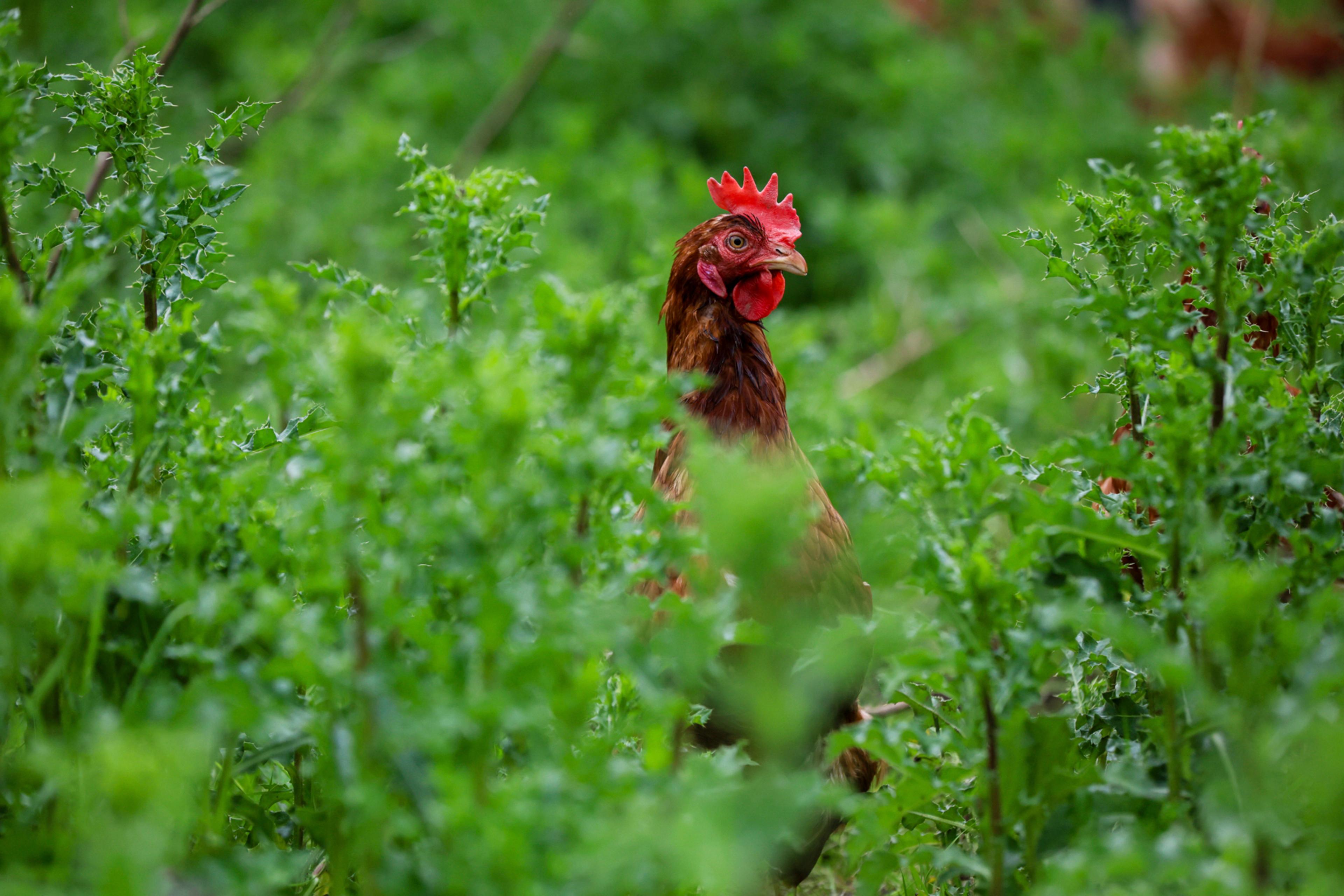
“Every egg comes from a hen whose quality of life depends on the choices we make when we shop.”
Izzy Candy
“So, with one of the biggest egg-eating days of the year approaching, we want to shine a light on these remarkable animals and encourage everyone to look for the RSPCA Assured label. That way, you can be confident your eggs come from cage-free hens reared to higher welfare standards.”
Ten things you might not know about laying hens
1. Hens' eggshells are the same colour as their earlobes
Strange but true - the colour of a hen’s earlobes will often match the colour of her eggs. So dark coloured earlobes normally mean brown eggs, while lighter-lobed birds lay white ones.
2. Hens can see more colours than we can
They don’t just see red, green and blue – they also see ultraviolet light. That means hens see more shades and colours than humans do.
3. Pecking orders are real – and important
Hens naturally form social hierarchies. Knowing their place helps them live together peacefully and prevents unnecessary conflict. It’s also where the common phrase ‘pecking order’ comes from.
4. Hens can dream and rest one side of their brain at a time
Hens experience REM (rapid eye movement) sleep – the stage where dreaming happens. They can also sleep with one eye open, keeping watch for predators using half their brain while the other half rests.
5. Hens are smarter than you think
The phrase ‘bird brain’ doesn’t apply here. Hens are natural problem-solvers with excellent long-term memories. They can recognise more than 100 different faces – both hens and humans – even after being apart for weeks.
6. Chicks are ahead of the curve
Studies show that at just two days old, chicks can understand object permanence. That means they understand that an object still exists even when hidden – a concept that human babies don’t grasp until around seven months of age.
7. Hens have more than 30 different sounds - including purring
From food calls to warning signals, hens use around 30 unique vocalisations to communicate with their flock. A happy hen might even purr like a cat.
8. Hens dustbathe to stay clean
It might look messy, but dustbathing is essential for hens. It helps remove parasites and keeps their feathers in good condition.
9. Perching helps hens feel safe
In the wild, hens sleep in trees. Providing raised perches allows farmed hens to feel secure and rest properly – an important part of higher welfare farming.
10. Hens love to play
Hens enjoy exploring, pecking, jumping and interacting with objects like straw bales, string, toys and even swings.
“As you can see, hens are extraordinary animals,” Izzy adds.
“Every time you choose eggs from a trusted higher welfare label, such as RSPCA Assured, free-range or organic, you help ensure hens have a better quality of life. You also support farmers who are committed to higher welfare standards and doing the right thing for their animals.
“Progress is happening. Most eggs produced in the UK are now cage-free, and public support for higher welfare continues to grow*** - 83% of eggs produced in the UK are now from cage-free hens****. But lower-welfare imports are appearing, and we want to see a future where no hens are kept in cages and are all reared to higher welfare standards. Together, we can help make that happen.”
Take a one minute action
* There were 43.7 million laying hens as of June 2025 livestock populations of which 17.3% were housed in enriched cages as of Q4 2025 egg statistics Q4 2025, resulting in an estimated 7.4 million hens in cages.
** A large pancake is defined as 750cm².
*** RSPCA Assured commissioned survey conducted by YouGov Plc. Total sample size was 2,139 adults. Fieldwork was undertaken 16-17 July 2025. The survey was carried out online. The figures have been weighted and are representative of all UK adults (aged 18+).