
Inside the WATOK abattoir assessment training course
By Jan Queen, RSPCA Assured assessor
As an RSPCA Assured assessor, I spend most of my working life on farms, checking that the RSPCA’s higher welfare standards are being met.
But our assessments don’t stop at the farm gate. The standards cover animals throughout their lives, including transport and slaughter, so it’s important our assessors have the specialist knowledge and skills needed to assess welfare at every stage.
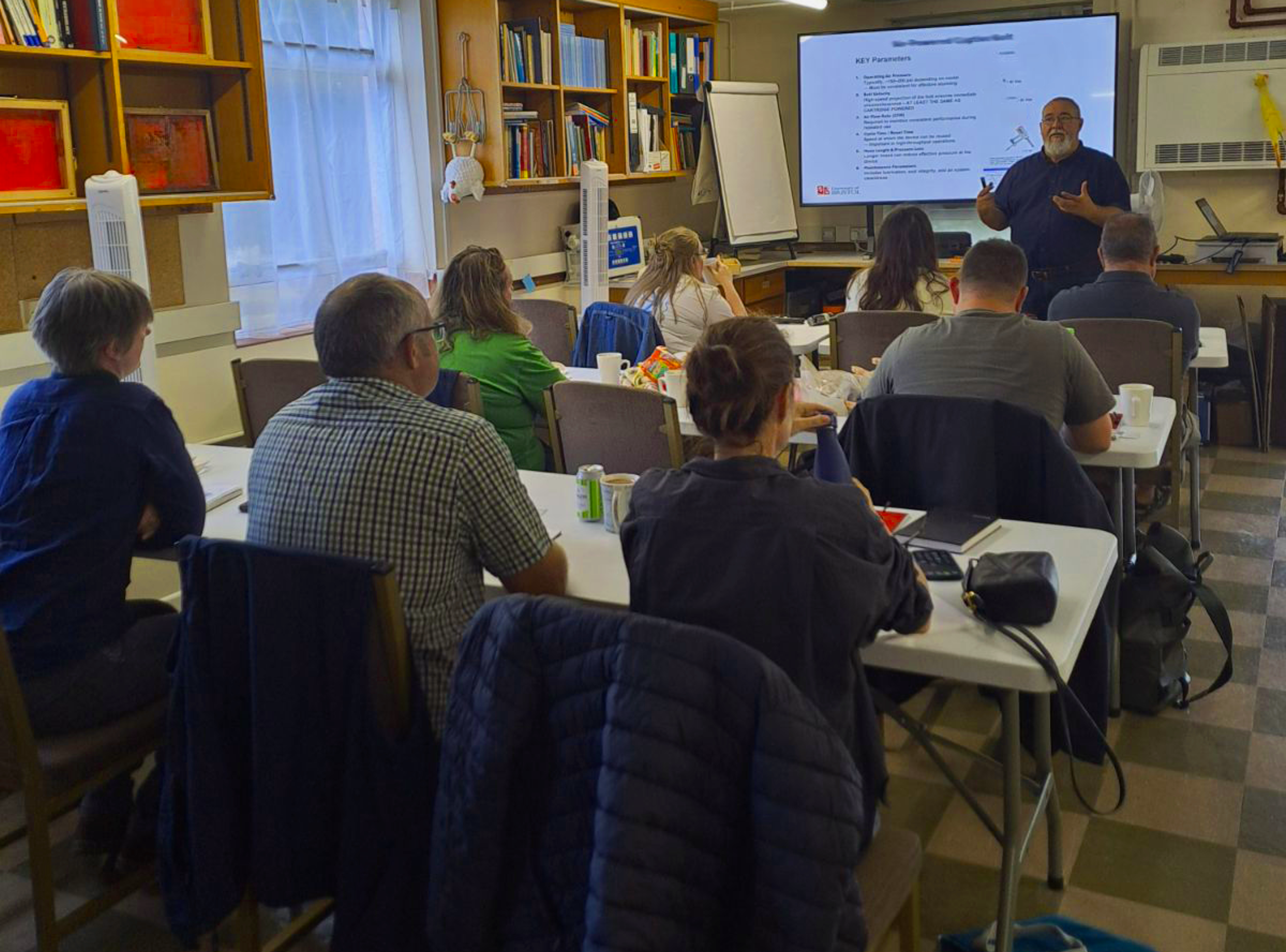
That’s why several members of the RSPCA Assured assessor team recently attended a welfare of animals at the time of killing (WATOK) training course at Bristol Veterinary School.
I was one of them, and the course gave us the opportunity to deepen our understanding of the science and practicalities behind animal welfare at slaughter and consider how we can apply that knowledge during our assessments.
Understanding welfare at slaughter
The course was led by vet Miguel Arranz, who has years of experience working with government bodies and the livestock industry.
Over two days, we explored animal welfare from arrival and lairage through to stunning and slaughter, looking at legislation, animal behaviour and physiology, and the practical measures needed to minimise pain, suffering and distress.
One of the most useful aspects for me was understanding the biological differences between species and how these affect the way animals respond at different stages of the process.
We also looked at the important roles played by official veterinarians (OV) and animal welfare officers (AWOs) in identifying operational risks and helping to ensure legal requirements and welfare standards are met.
A closer look at stunning
A significant part of the course focused on stunning and the different electrical, mechanical and gas methods used for different species.
We explored the science behind how these methods work, how stunning affects consciousness and the physiological signs assessors should look for when determining whether an animal has been effectively stunned.
The training also reinforced the importance of factors such as using the correct equipment settings, regular maintenance and effective monitoring.
Understanding not just what should happen, but the science behind why it matters, gives us greater insight when carrying out assessments.
Putting the learning into practice
I’ve carried out slaughterhouse assessments before, but I was amazed by how much more there was to learn. The training really built on my existing knowledge and experience.
Going deeper into the science behind current legislation and slaughter practices, as well as some of the practical challenges involved, helped me better understand how these relate to the RSPCA welfare standards.
For me, that means being better equipped to ask informed and probing questions during assessments and knowing where to focus my attention.
It also means looking at the entire process: from the knowledge and actions of staff to monitoring procedures, record-keeping, and the condition and performance of equipment.
Continuing to improve our assessments
Animal welfare at slaughter has developed considerably over the years, but there’s always more to learn and opportunities to improve.
Training like this helps ensure I – and my fellow assessors – continue to develop our knowledge, keep up to date with the science and the practical realities of farming.
Building relationships with specialists such as those at the Bristol Veterinary School also gives us access to valuable expertise as we continue to refine and improve our assessment process.
I came away from the course with greater knowledge, more confidence and a much deeper understanding of the science behind welfare at slaughter.
Most importantly, I can put that learning into practice in my assessments and use it to help drive better welfare for farmed animals.
Wednesday 23 September 2026