
Free farrowing vs flexible farrowing: what’s best for pig welfare?
By Phoebe Hartnett, RSPCA senior scientific and policy officer
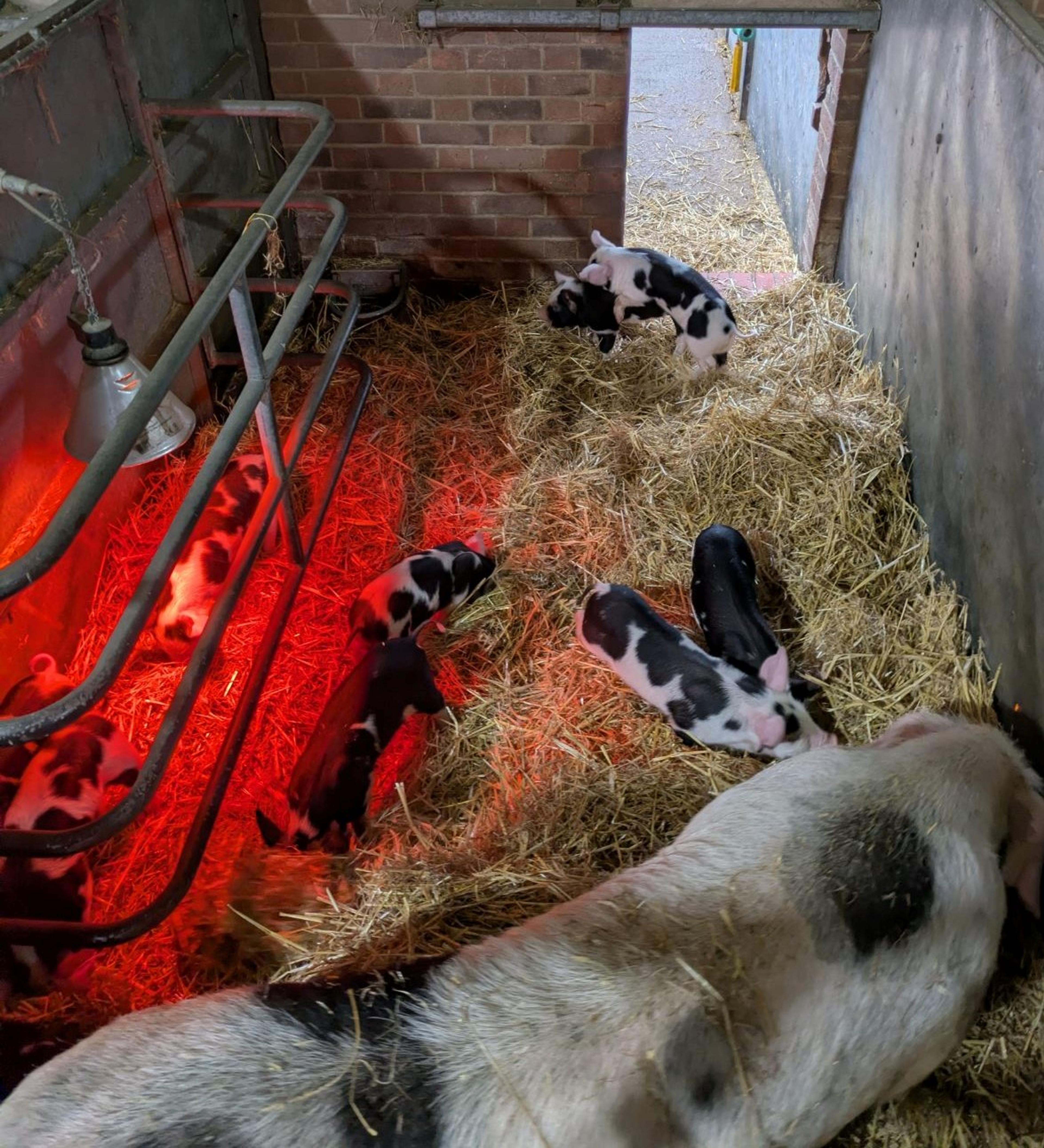
There’s a lot of talk in the industry about flexible farrowing – systems that allow temporary confinement of pregnant and birthing sows. And the government’s new Animal Welfare Strategy is likely to intensify the debate.
Those in favour see it as a positive welfare improvement, or at least a temporary step towards the goal of fully free farrowing. But both arguments miss the fundamental point - that flexible farrowing is not the solution to truly improving the lives of farmed sows.
Neither does it meet the demand of the 85%* of UK adults who say it’s important that farmed animals are cared for to higher welfare standards.
What flexible farrowing really means
Flexible farrowing, regardless of how it is promoted, is ultimately just tinkering around the edges of conventional farrowing systems. While there might be a limit on how long a sow can be confined – ten days has been suggested – the practice of sow confinement itself remains.
And this is the crux of the matter – the restriction of a sow’s ability to move, nest into comfortable bedding and interact naturally with her litter at a critical time can be hugely detrimental to her welfare.
We know from conventional confinement systems that physically restricting a sow’s ability to turn, walk or carry out natural nest-building causes severe physiological stress, leading to abnormal behaviours and health conditions**. In addition, the inability to move freely exacerbates the risk of heat stress for sows, a major concern during lactation***.
Flexible farrowing is not the answer to piglet crushing - here’s why.
Sow confinement is often justified by crushing risks, yet crates don’t eliminate piglet mortality. Crushing still occurs frequently in confined systems, often trapping piglets against bars and necessitating euthanasia.
While crushing is a serious concern, it persists across all systems, including conventional and flexible farrowing. In fact, pre-weaning mortality rates are almost identical in unconfined outdoor systems (12.6%) and confined indoor systems (12.3%), on average****. Piglet mortality is complex: beyond crushing, significant losses stem from low birth weight, starvation, hypothermia, and disease.
Research proves free farrowing achieves comparable survival. A study of nearly 70,000 litters found that while crushing was more common in free farrowing systems, this was offset by significantly higher deaths from other causes in crates. This study concluded that litter size at birth is the main influence on piglet losses.
While a 2026 University of Leeds study showed flexible farrowing crates increased piglet survival, we should note that the free farrowing pens used were sub-standard, had no straw and were undersized.
Despite this, the unconfined sows raised piglets 4kg heavier at weaning, with better maternal behaviour, lower stress, and fewer crushings later on. These findings suggest that modern, purpose-built free farrowing systems would outperform these results with regard to crushings.
To successfully transition away from crates, the industry must focus on the ‘3Ps’: pen, people, and pigs. While advancements in pen design have been significant, critical gaps remain in optimising pig selection (genetics) and providing people (stockpeople) with the necessary training and best-practice support. Success depends on balancing these three pillars rather than relying on the crate as a management ‘crutch’.
The RSPCA has been calling for a ban on farrowing crates since 1999, and subsequently banned them in the RSPCA pig welfare standards for new RSPCA Assured members in 2010 and all members in 2014.
The RSPCA welfare standards have dedicated free farrowing standards, which are implemented on RSPCA Assured farms. By focusing on these standards, producers can protect piglets without compromising sow welfare.
Free farrowing isn’t only an ethical choice - it’s a commercial one
Approximately 40% of UK sows are already free farrowing outdoors in arcs, proving sows are perfectly capable of raising their litters without confinement when provided with an appropriate environment.
And we can learn much from Europe - countries such as Sweden, Switzerland and Norway have all opted for free farrowing as the most welfare-friendly approach.
This is not only an ethical argument; it is also a commercial one. Consumers are increasingly discerning and willing to put their money where their values are. RSPCA Assured research shows 62% of UK adults would pay more for British, higher-welfare products over cheaper alternatives*****.
By providing genuine, evidence-based, higher-welfare products – like those certified by RSPCA Assured –producers are future-proofing their businesses, building trust, and meeting this growing public demand.
The evidence is right in front of us – we need to commit to free farrowing
Transitioning to free farrowing is a powerful step towards a more humane future for farming. By doing so, we’ll respect the natural maternal instincts of sows while improving piglet survival rates through pen design, optimising litter sizes and management.
Extensive data proves that we do not have to choose between welfare and productivity – in fact, the shift away from confinement creates a healthier, more resilient environment for both animals and farmers. Now is the time to lead with compassion and adopt systems that truly allow both sows and piglets to thrive.
With a significant outdoor herd and RSPCA Assured to support producers, the UK has a unique opportunity to become a world leader for higher welfare pig farming. By addressing the root causes of farrowing challenges and investing wisely in genuinely welfare-friendly, future-proof systems, we can all work effectively together to ensure sows get the respect they deserve.
*RSPCA Assured commissioned survey conducted by YouGov Plc. Total sample size was 2,139 adults. Fieldwork was undertaken 16 to17 July 2025. The survey was carried out online. The figures have been weighted and are representative of all UK adults (aged 18+).
**European Food Safety Authority, 2022.
***Understanding the behaviour and improving the behaviour of pigs, Edwards., S., 2020.
****ahdb.org.uk/pork-costings-and-herd-performance (key performance indicators table for breeding herds, pre-weaning mortality rates, 12-month average as of September 2025)
*****RSPCA Assured commissioned survey conducted by YouGov Plc. Total sample size was 2,131 adults. Fieldwork was undertaken between 4 to 5 September 2025. The survey was carried out online.
Tuesday 3 February 2026