
How the RSPCA welfare standards are developed
By Julie Taylor, RSPCA Assured new standards engagement advisor
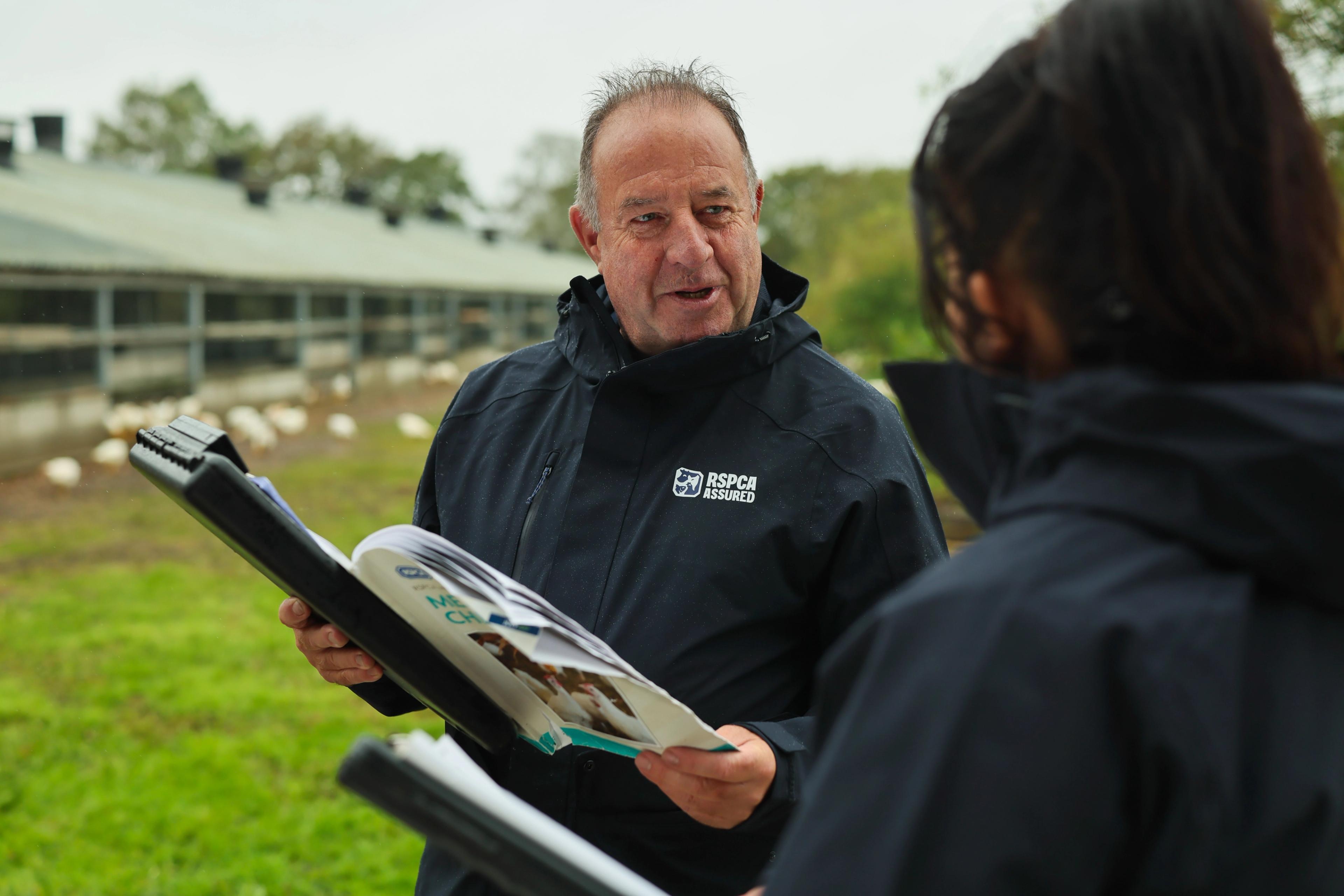
The RSPCA welfare standards for farmed animals are written and owned by the RSPCA.
They set the clear, evidence-based requirements that businesses – including farms, hauliers and slaughterhouses – must meet to achieve higher animal welfare.
The standards are designed to deliver meaningful improvements for animals, while remaining achievable on commercial farms.
RSPCA Assured’s role is to ensure standards are met by scheme members, working closely with farmers, producers, and supply chain businesses.
What the standards cover
The RSPCA welfare standards cover all key stages of an animal’s life, including:
- Feed and water provision
- Housing and the animals’ environment
- Management and handling
- Health care and veterinary treatment
- Transport
- Humane slaughter or killing.
They apply across a wide range of production systems, including indoor, outdoor, free-range and organic farming, on both small and large farms.
Evidence-based and practical
The standards are developed using the best available scientific evidence, alongside practical farming knowledge and experience.
Input comes from:
- The latest scientific research
- Practical experience from members
- Vets, scientists and industry experts
- RSPCA Assured assessors who see the standards in action.
This ensures standards focus on outcomes that matter most to animals, reflect current science and are practical across different farm systems.
Using evidence and expert input
The RSPCA draws on multiple sources when developing and reviewing standards, including:
- Peer-reviewed research
- Member case studies, practical demonstrations and specialist advice
- Evidence from other animal welfare organisations
- Industry, government and NGO publications.
This approach ensures standards are grounded in both science and practical experience.
The role of Standards Technical Advisory Groups (STAGs)
Proposed updates to the standards are reviewed and developed through a formal consultation process with the RSPCA’s species-specific STAGs.
Each STAG includes experts from farming and food sectors, veterinary professionals, welfare scientists and other specialists.
It’s particularly important that members are part of the STAGs. Any changes to the standards directly affect how they run their farms, so involving them provides genuine insight into how the standards are likely to work in practice.
Minor amendments may be agreed at this stage, while more significant changes are reviewed by the RSPCA trustee board’s animal welfare sub-committee.
Once approved, updated standards are published on both the RSPCA and RSPCA Assured websites.
Members are informed of changes at least three months before they’re required to apply them, with longer lead-in times for significant changes that may require additional planning or investment.
This rigorous process ensures members have clear, practical standards while helping deliver meaningful welfare improvements for animals.
Friday 9 January 2026